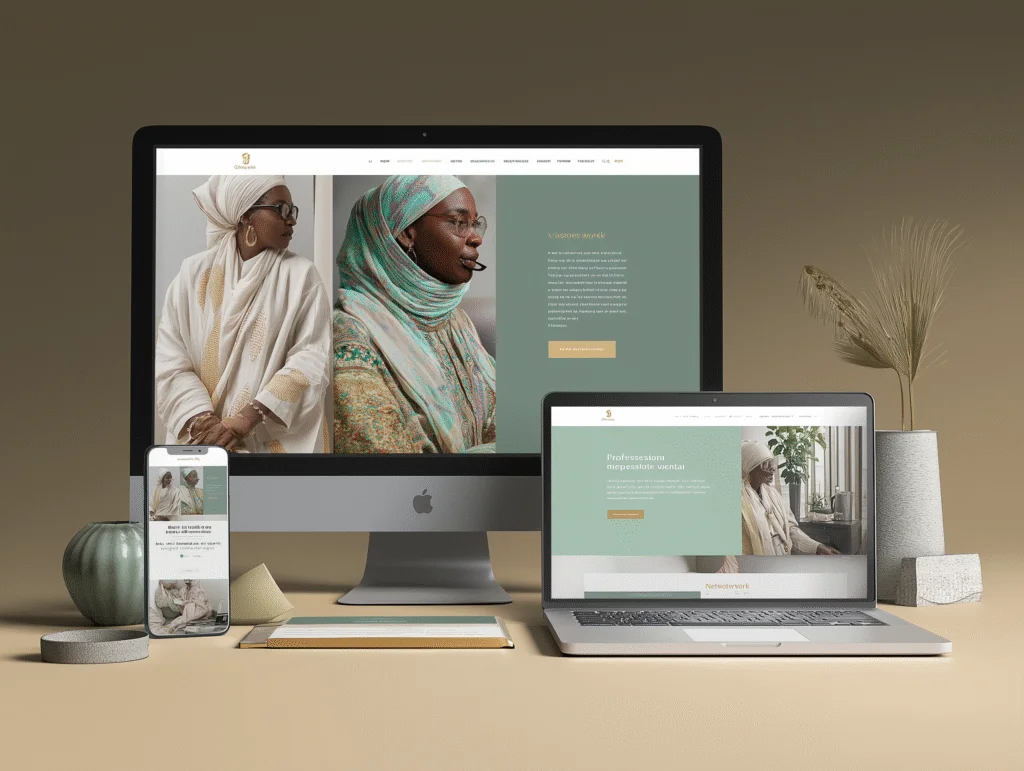
In 2025, most customer journeys start in the same place: a search bar. Studies show that around 80% of consumers research online before buying, and more than 80% expect even small businesses to have some kind of online presence. At the same time, about 73% of U.S. small businesses already have a website—meaning the remaining 27% are competing with a serious visibility disadvantage. If your business doesn’t show up when people search, for many of them you simply don’t exist.
A professional website is also a powerful credibility signal. Research based on Verisign data found that roughly two-thirds of consumers see businesses with a website as more trustworthy than those without one, and many say they judge credibility based on how the website looks. Another study reported that nearly a third of shoppers chose not to buy from a small business specifically because it didn’t have a website. In other words, even if your product or service is excellent, lack of a website can quietly push potential customers toward your competitors.
Beyond credibility, your website is a 24/7 “digital storefront” that drives both online and offline sales. Articles focused on small business behavior show that over 90% of potential customers check businesses online before visiting in person, and that websites are key to influencing those decisions. Another report found that small-business owners see a website as critical for driving local foot traffic, not just online sales—people use it to find directions, opening hours, menus, services, and contact options before they ever walk through your door. For local service providers, restaurants, and trades, this can be the difference between a slow day and a fully booked schedule.
Your website also becomes the hub of your marketing engine. Social media posts, online ads, Google Business Profile, email campaigns—all of them work better when they have a clear destination: a well-structured site that explains what you do and invites people to take action (call, book, buy, request a quote). Recent analyses of small business websites show that a steady stream of visitors combined with even modest conversion rates can translate into a meaningful number of new customers each month, especially when the site is mobile-friendly and professionally designed. Unlike a static flyer, your site can grow with your business: you can add landing pages for new services, publish blog posts to rank on Google, or integrate online booking and payments over time.
Owning your website also means owning your digital real estate. Many small businesses rely only on social media, but those platforms can change their rules, limit your reach, or suspend accounts with little warning. A website and your own domain name are assets you control: you decide the content, the design, the user experience, and you’re not at the mercy of constantly shifting algorithms. As several industry guides note, a website also lets you build a more stable brand identity, including professional email addresses (like info@yourbusiness.com) that reinforce trust and consistency.
Finally, a website gives you data—something traditional word-of-mouth simply can’t. With basic website analytics, even a very small business can see how many people visit, which pages they like, where they drop off, and which campaigns actually generate leads or sales. Experts in web analytics for small businesses highlight that this kind of insight helps owners refine their message, improve performance (like loading speed and mobile usability), and get more value from their marketing budget. When you combine this data with your knowledge of your customers, your website stops being “just a page on the internet” and becomes a decision-making tool for every part of your business.
The good news: you don’t need a huge budget or advanced technical skills to start. Modern tools, templates, and professional partners make it possible to launch a clean, effective website and improve it over time. The key is simply this: treat your website as an investment, not an expense. For small businesses that want to be discovered, trusted, and chosen in a digital-first world, having a website is no longer optional—it’s the foundation of long-term growth.